About an hour and a half north of Flagstaff on Highway 89, beyond Sedona, lies the Wupatki National Monument. It is said that the ancestors of the Pueblo people began living in this area around 900 years ago, engaging in agriculture such as corn farming for over a century. The stone-built settlements and meeting places evoke the bustle of that time.
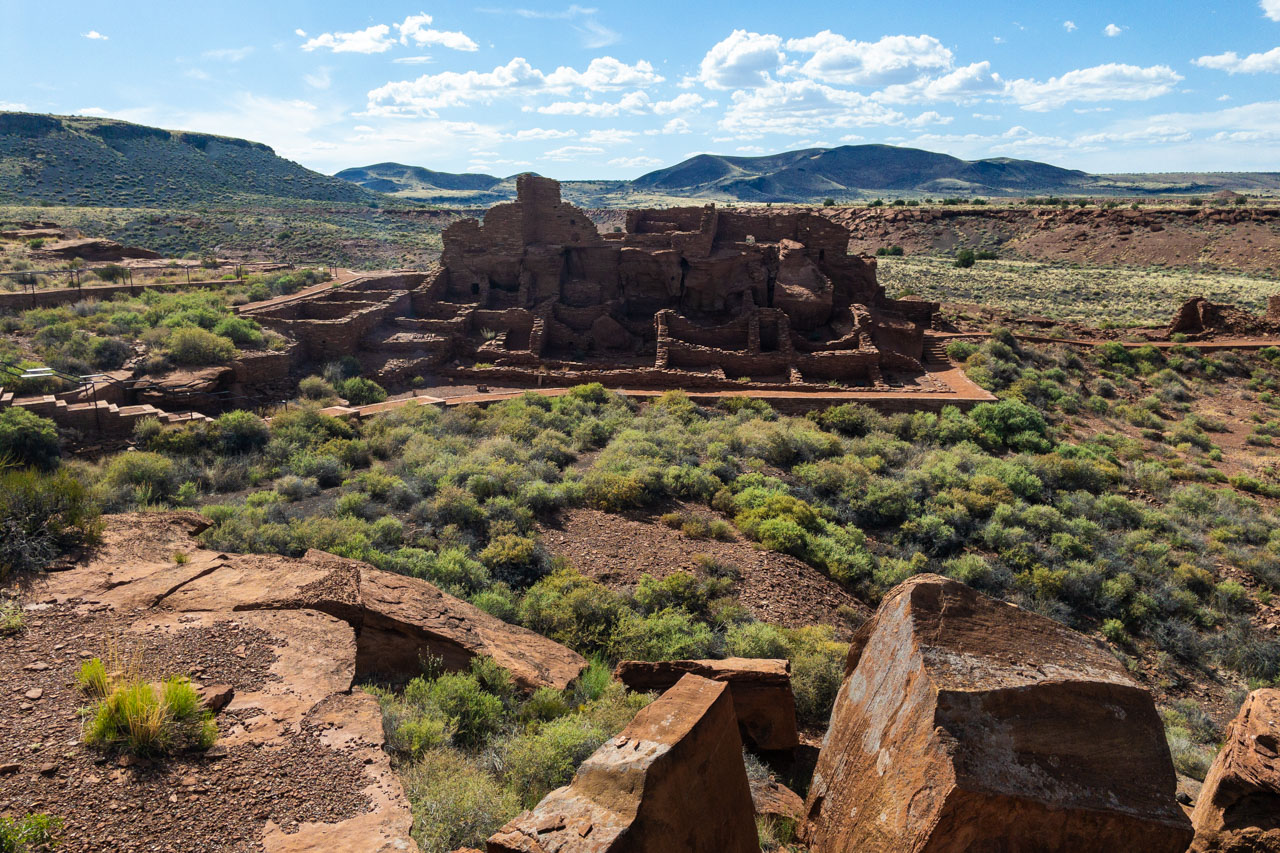
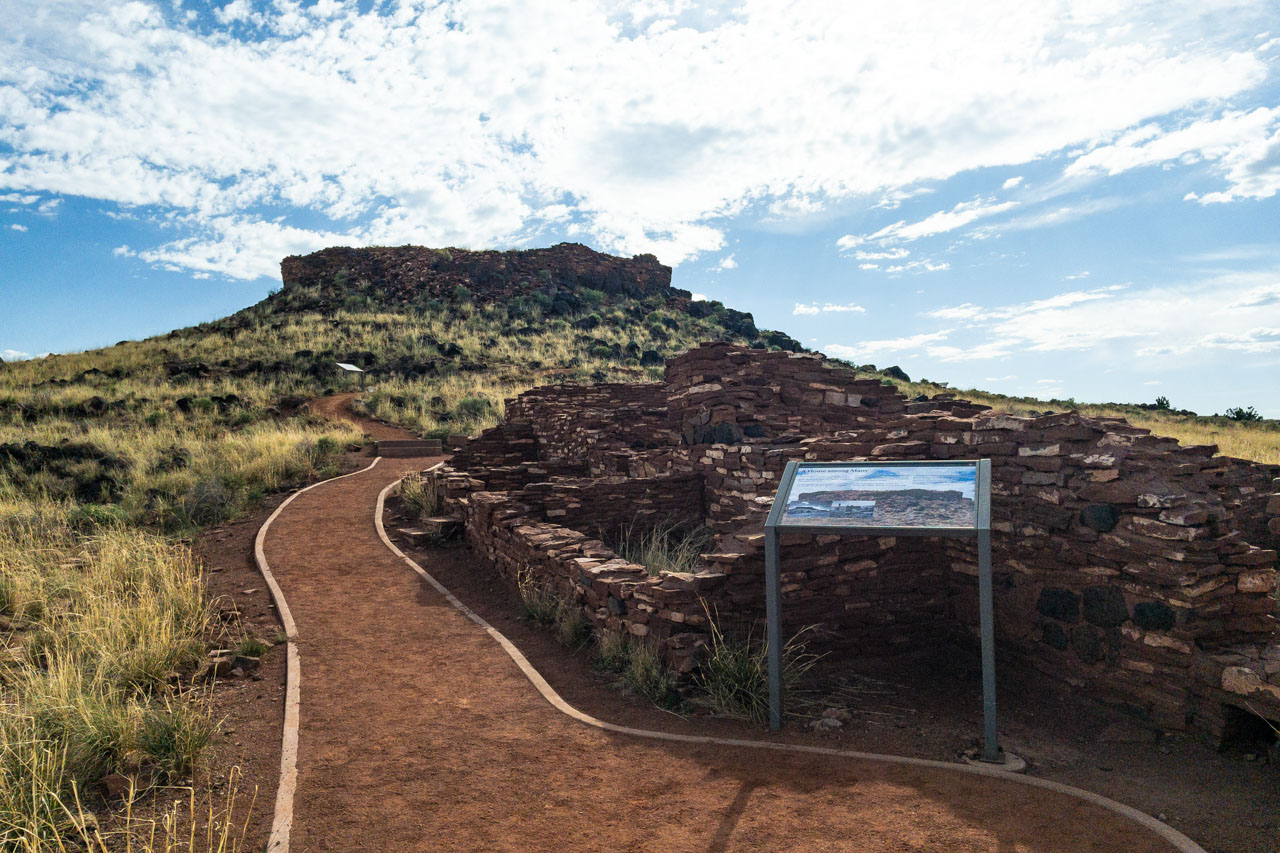
There are ruins spread over a wide area, and it seems you need to purchase a pass at the visitor center to see all of them. The ruins in the photo can be easily visited from the visitor center. Due to time constraints, I visited this “Wupatki Pueblo” and the “Citadel Pueblo” located along Highway 89.
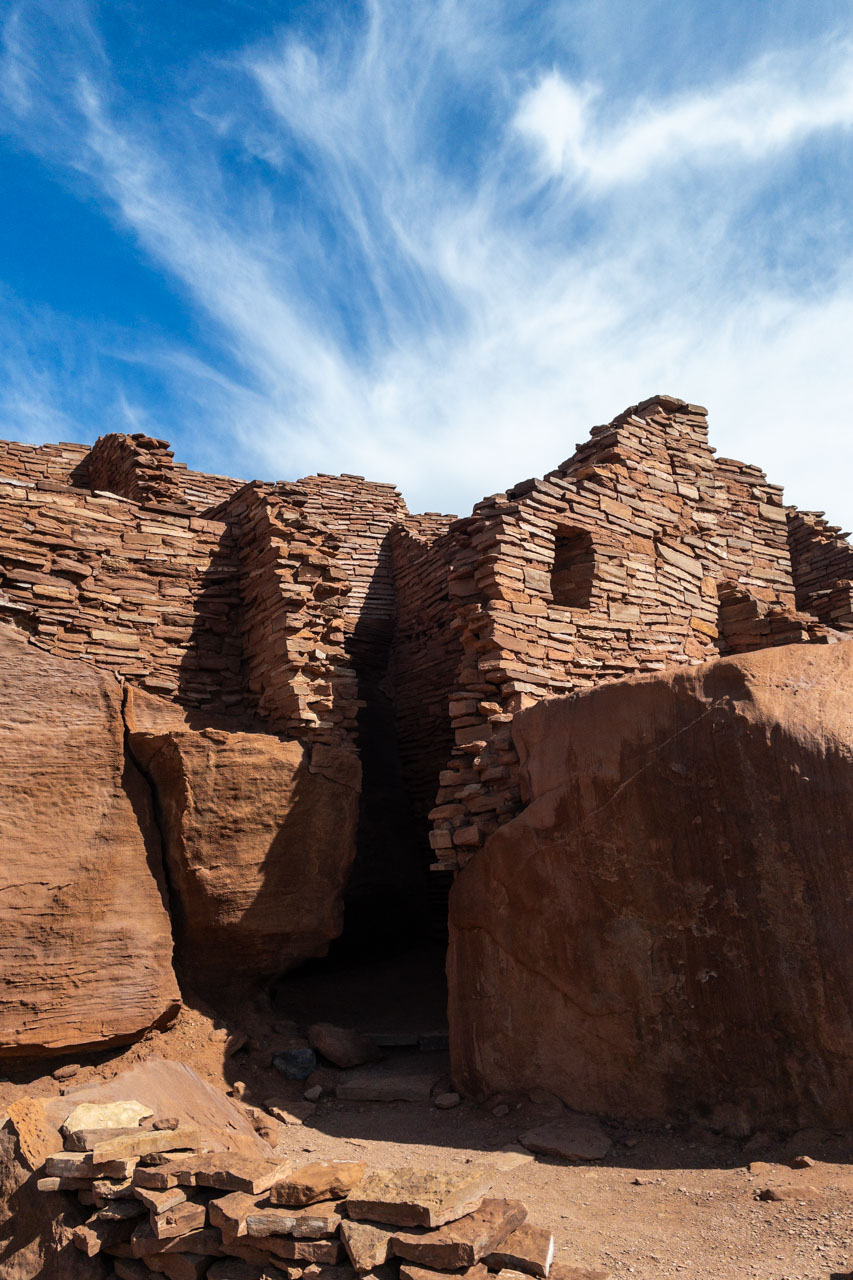
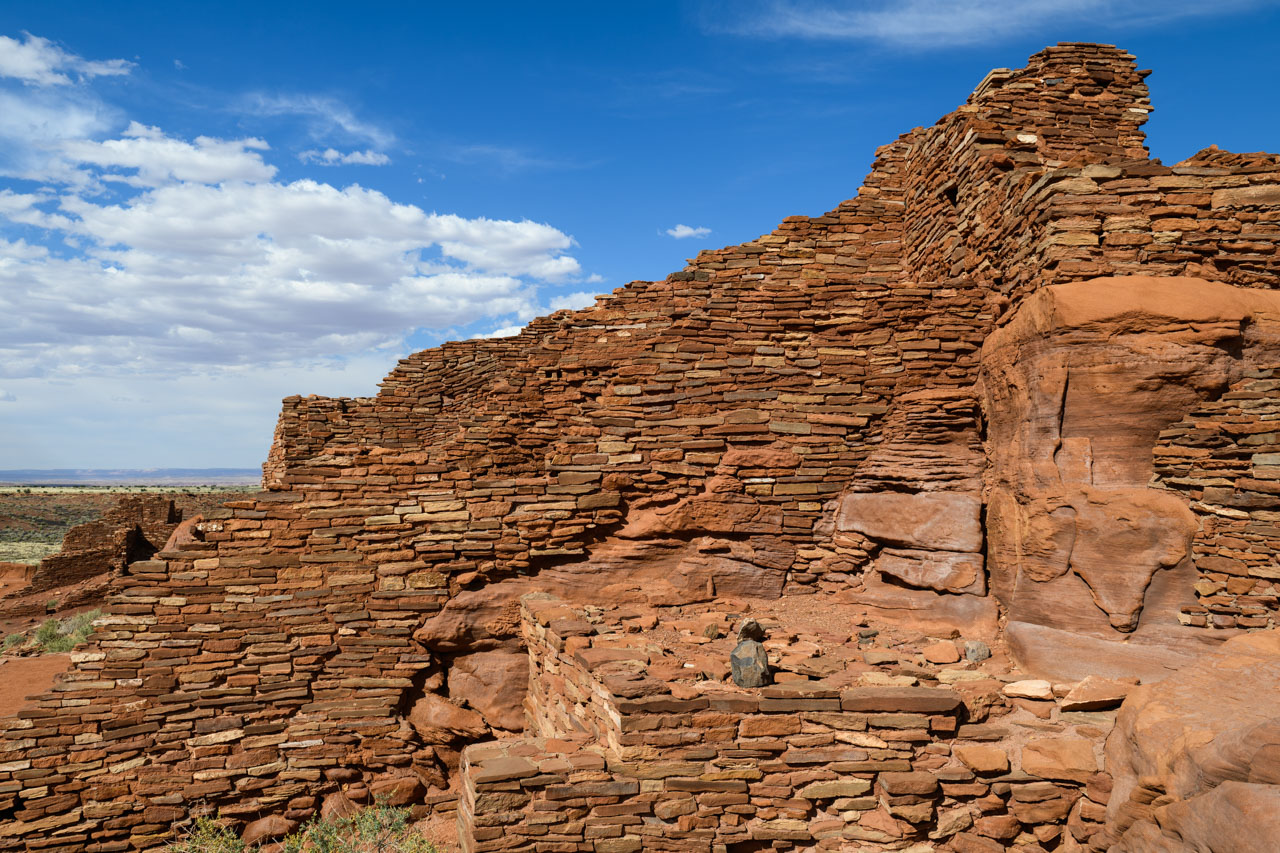
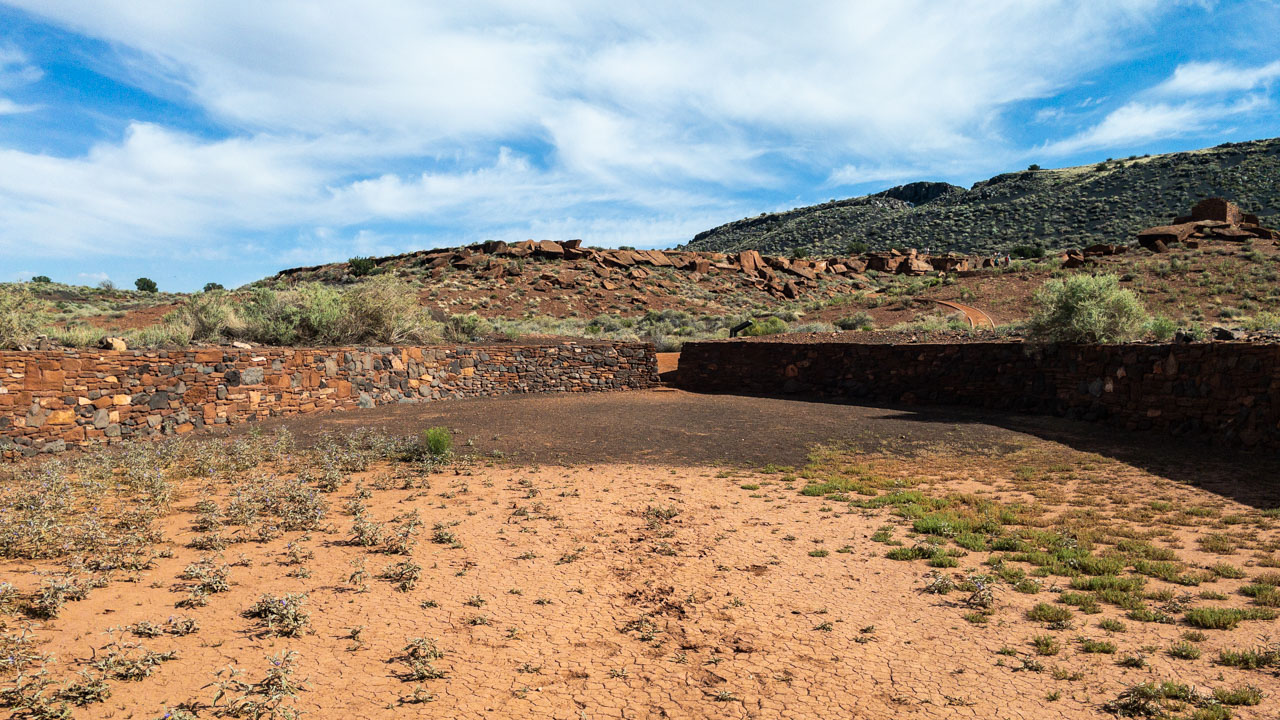
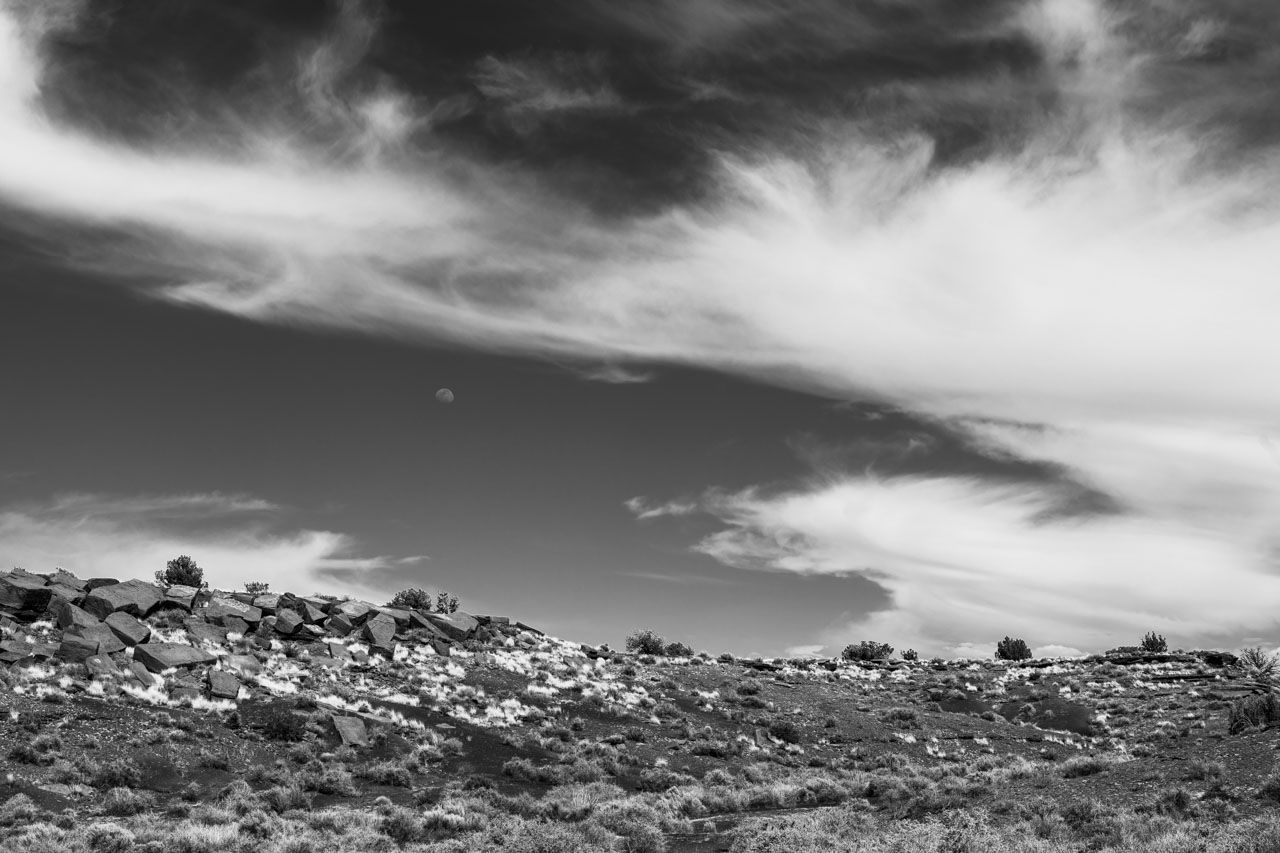
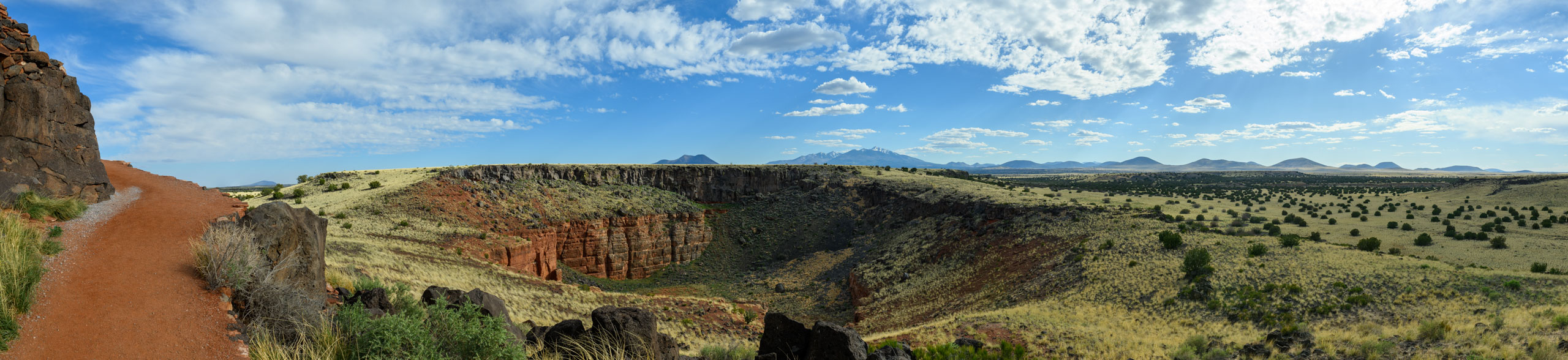
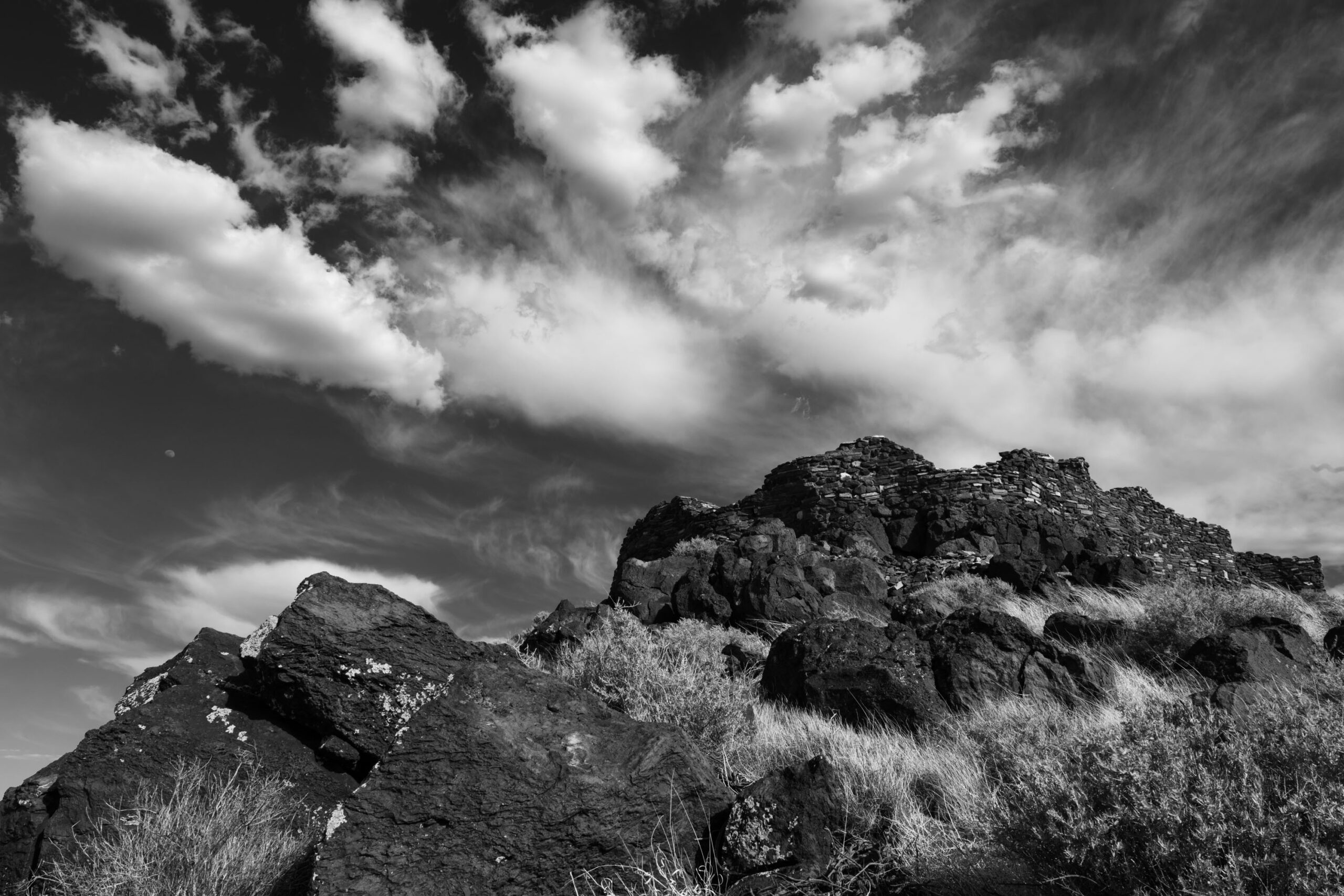
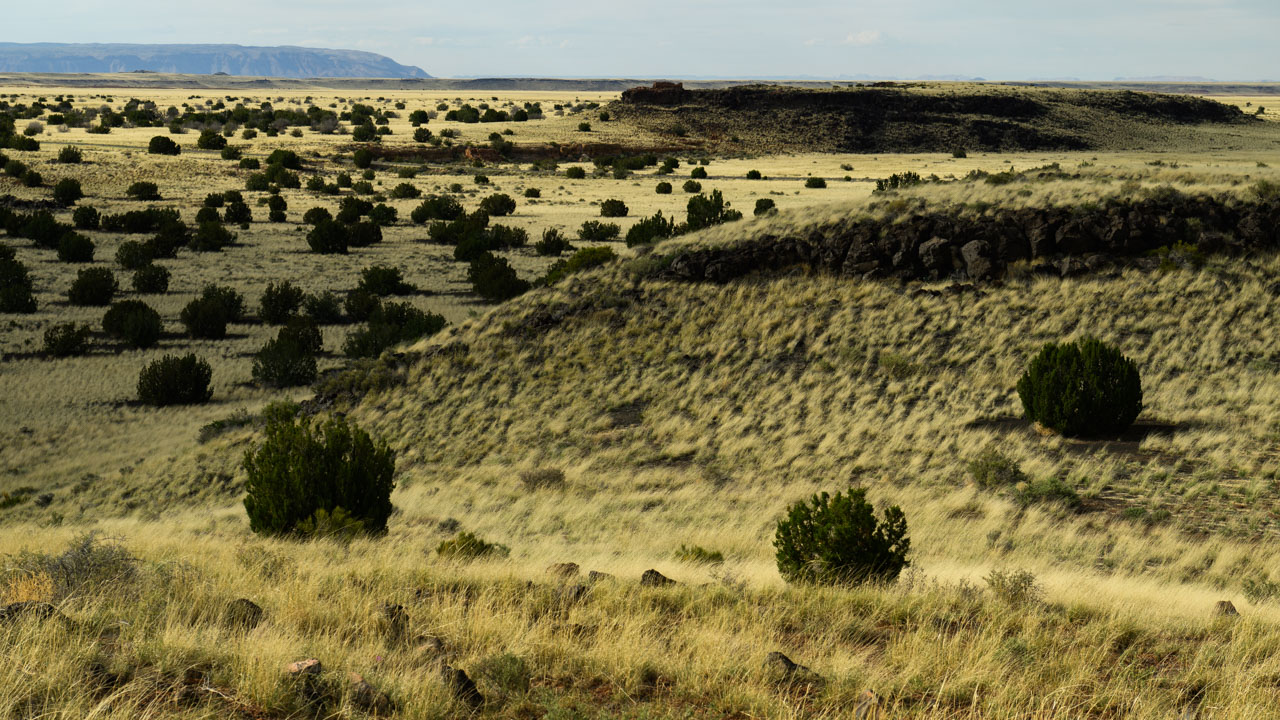
The central ruins of Wupatki Pueblo. The structure is built with stone masonry, utilizing natural rocks, and is divided into several rooms equipped with features like drainage systems.The wall is built on a foundation of natural rock.The remains of a meeting place.The Citadel Pueblo. Unlike Sedona, there are few tourists here.As you ascend to the ruins, you can see a huge crater-like formation.At first glance, it looks like a fortress, but traces of dwellings and agriculture have also been found, indicating that it was likely a settlement.Looking at the current dry landscape, it’s hard to imagine how agriculture was sustained here. It’s a mystery that only archaeologists might unravel, as this is a story from nearly a thousand years ago.